
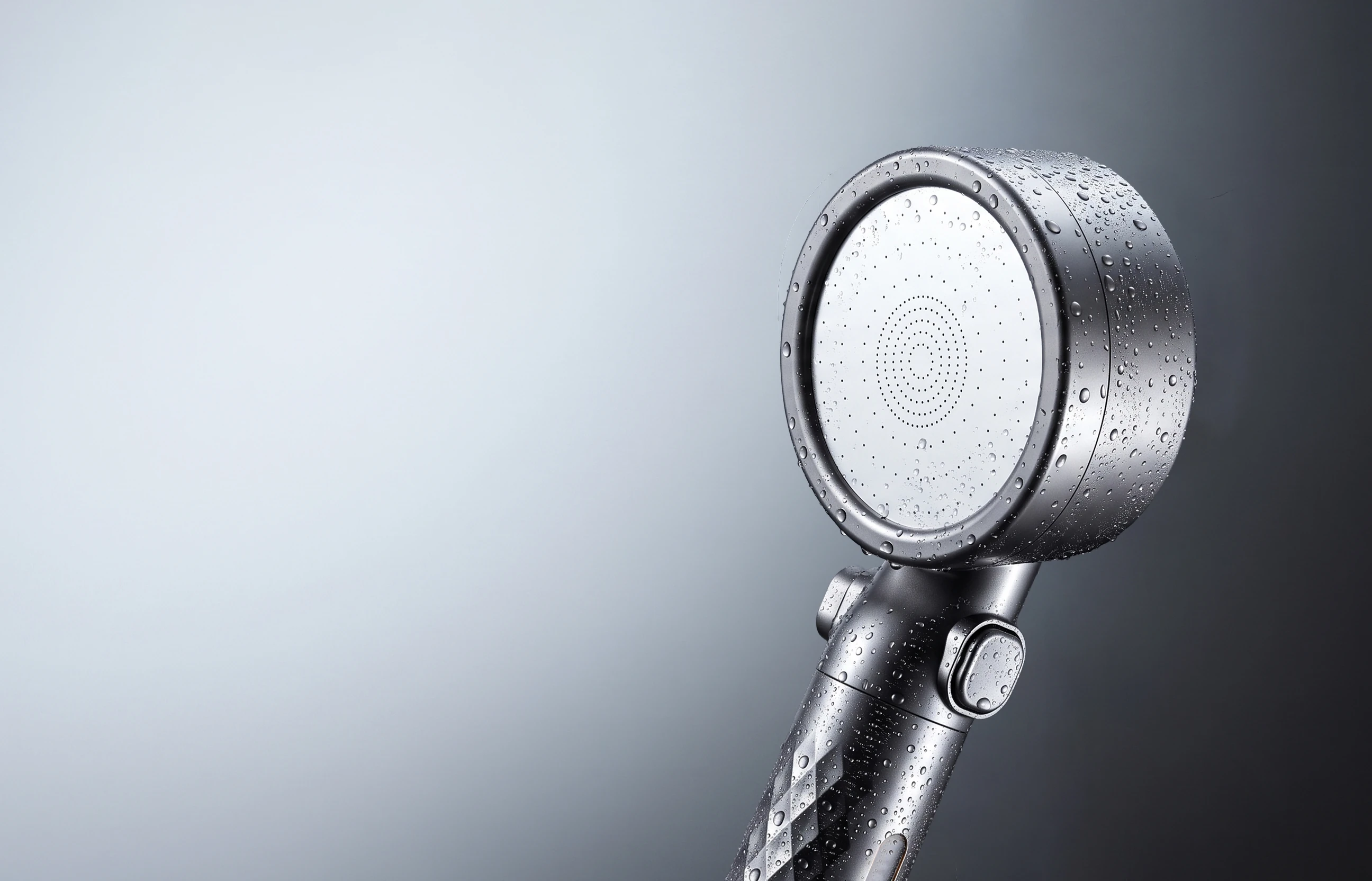
Almost every buyer who asks us about shower filtration starts with the same question: does the chlorine in tap water actually damage hair and skin, or is that just marketing? The honest answer is that the effect is real, but it is smaller and slower than most retail copy suggests — and understanding the real mechanism is what separates a product that performs from one that gets returned.
What chlorine is actually doing in your shower
Municipal water treatment adds chlorine or chloramine as a disinfectant residual. That residual has to survive the journey from the treatment plant to your tap, which means it is deliberately designed to keep reacting with organic matter. When it reaches your shower head, it meets two things it reacts with readily: the lipids on your skin surface and the keratin proteins in your hair.
Keratin contains cysteine-rich disulfide bonds that give hair its strength and shape. Oxidative chemistry attacks those bonds. At low, intermittent exposure the effect is subtle. At high concentration, or with daily long showers, the visible symptoms accumulate:
- Hair that feels rougher and tangles more easily, because the cuticle lifts
- Colour fading faster than expected, particularly on dyed or bleached hair
- Scalp tightness or flaking after showering
- Skin that feels dry immediately after towelling off, before any product is applied
Why the shower matters more than the tap
People drink roughly two litres of water a day. A ten-minute shower can pass twenty to forty litres over skin and scalp, at a higher temperature, with the pores open. If your concern is chlorine exposure, the shower is the larger surface-area event — which is why shower filtration exists as a category at all, and why it is not the same purchase decision as a drinking-water filter.
Chloramine is the harder case
This is the part retail listings usually omit. Many utilities switched from free chlorine to chloramine (monochloramine) because it produces fewer regulated disinfection by-products. Chloramine is more stable, which is exactly why it is harder to remove. Standard activated carbon that handles free chlorine well can be noticeably weaker against chloramine, and it needs longer contact time than a small shower cartridge typically allows.
For suppliers, this is a specification question, not a marketing question. If your target market is served by chloraminated water — much of the United States, parts of the UK and Australia — you should be able to state clearly which media your cartridge uses and what test standard the claim is based on.
What a shower filter can and cannot do
A well-built shower filter is a point-of-use device. Realistic claims:
- Can do: reduce free chlorine and chloramine, capture sediment and rust particulates, and in some formulations reduce certain dissolved metals. KDF media additionally creates an environment that is hostile to bacteria through redox chemistry.
- Cannot do: soften water. Removing calcium and magnesium requires ion exchange with salt regeneration or a reverse-osmosis stage. A cartridge that fits in a shower head has neither.
- Cannot do: sterilise water, or make it safe to drink.
Those three lines are worth putting in your own product copy. Buyers who discover the limitation after purchase leave one-star reviews; buyers who understand the scope of the product become repeat customers for replacement cartridges — which is where the margin actually lives.
What the standards cover
In North America, shower filtration claims are usually tested against NSF/ANSI 42, which covers aesthetic effects including chlorine taste and odour and particulate reduction. NSF/ANSI 53 covers health-related contaminants and is a much heavier test. Many shower filters are certified to 42 only. Being explicit about which standard applies, and which contaminants were tested, is one of the fastest ways to differentiate a listing from the generic competition.
Practical guidance for buyers and brands
If you are specifying a shower filter for a market, four decisions determine whether the product works:
- Media selection matched to the water. Determine free chlorine versus chloramine first. This single fact changes the cartridge.
- Contact time. Media volume and flow rate together set contact time. A cartridge that is technically correct but too small for the flow will underperform in the field even if it passed a bench test.
- Rated service life. Publish it in litres or gallons, not in months. Months is a marketing unit; litres is an engineering unit, and engineering units survive scrutiny.
- Cartridge availability. The replacement cartridge is the recurring revenue. If your supply chain cannot guarantee cartridges for five years, the product has no aftermarket.
Bottom line
Chlorine and chloramine do interact with hair and skin, and the shower is a meaningful exposure route. A shower filter is a legitimate engineering response to that — provided it is specified for the actual water chemistry, sized for the actual flow rate, and honest about not being a water softener. Brands that get those three things right tend to hold their reviews and their reorder rate. Brands that copy generic claims tend to churn.
If you are developing a shower filter SKU and want to talk through media selection, cartridge sizing or certification scope for your market, our engineering team works with brand and distributor partners on exactly this specification stage.
